
More Life to Live - John Vreeke’s Organ Transplant Journey

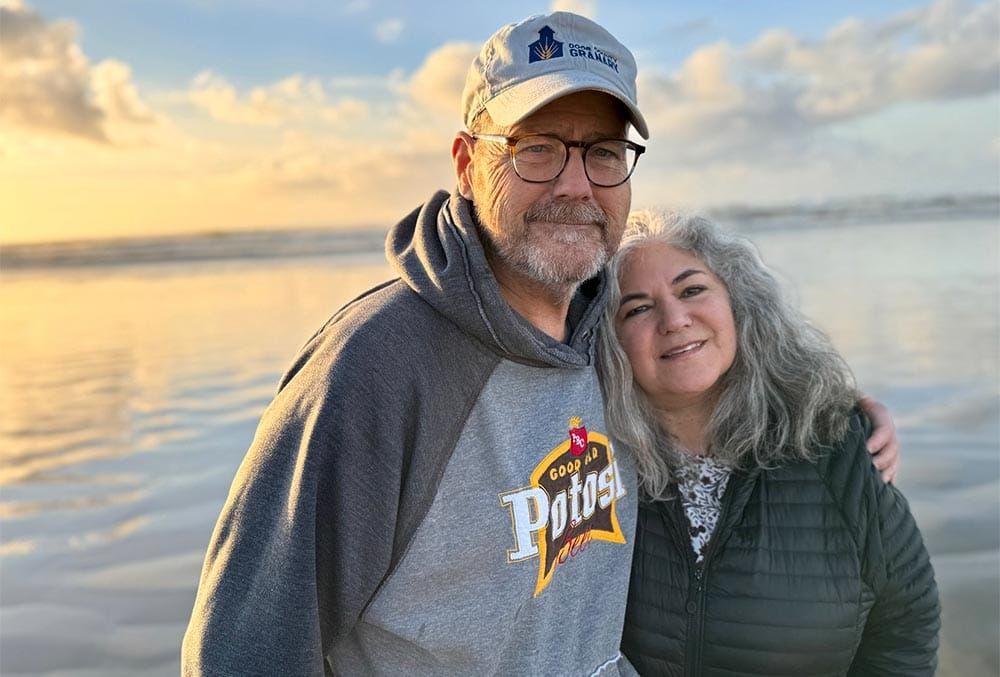
John Vreeke and Tracy Duffin Vreeke are active and caring members of the Door County community. They raised their daughter here, they are involved with the schools and other community organizations, they volunteer; they are kind and fun to be around and it shows the moment you meet them. This is the story of John’s organ transplant and the generosity of others.
Living with Type 1 Diabetes
John Vreeke moved to Door County from Manitowoc in 1997 to start a life with Tracy Duffin. At that point, he had been living with a Type 1 Diabetes (T1D) diagnosis since he was 17 years old.
Living with Type 1 Diabetes (T1D) is a demanding 24/7, 365-day-a-year job. With T1D, the pancreas no longer produces insulin. As a result, every day requires measuring and managing blood glucose levels with insulin injections. This is beyond an annoyance. T1D, like many chronic illnesses, can lead to burnout, anxiety or depression.
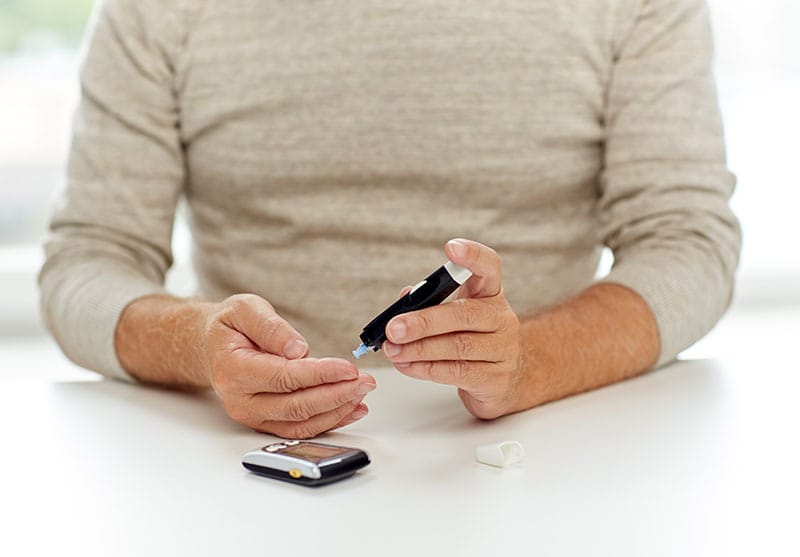
If John’s glucose got too high or too low, he could experience extreme thirst and fatigue, shaking and confusion, and it could even harm his organs or cause a coma. Managing the non-functioning pancreas required constant vigilance.
The toll of TD1
Type 1 Diabetes (T1D) took a toll on John’s health. T1D can significantly affect the kidneys over time, a condition known as diabetic nephropathy. High blood sugar levels can damage the kidney's filtering units, which can cause them to leak protein and, if untreated, progress to chronic kidney disease or failure.
In 2020, he was diagnosed with End Stage Renal Disease (ESRD). There is no cure for ESRD, but John’s life could be extended with dialysis and an eventual organ transplant, if he qualified.
John underwent multiple medical procedures to prepare him for dialysis, a temporary life-extending treatment that allowed him time to await a transplant.
Dialysis is a life-saving, routine treatment for kidney failure that filters waste and excess fluid from the blood. It typically involves sitting in a chair for 3–4 hours, three times a week.
Dialysis patients, and John was no exception, often experience extreme fatigue, muscle cramps, and dizziness immediately following treatment, with many reporting a "drained" feeling. While it serves as a life-saving, necessary, and sometimes relieving process, it often causes significant emotional changes, including anxiety, frustration, and a necessary adjustment to a "new normal" in day-to-day life.
John was employed by Door County Medical Center (DCMC) as a chef in Nutritional Services. While DCMC graciously worked with John’s availability, he eventually got to a point where he wasn’t able to work at all. His kidneys were failing.
Glimmers of Hope
In February of 2021, after rigorous testing and evaluation, John was approved as a double pancreas/kidney transplant candidate at UW Health in Madison and placed on the waiting list on inactive status.
As of early 2026, over 1,400 to 1,500 people are on the active organ transplant waiting list in Wisconsin. The vast majority of these patients are awaiting a kidney, with roughly 1,250 people on the kidney transplant waitlist specifically.
While being approved as a transplant candidate was a major hurdle, John had additional medical complications and multiple ICU hospital stays that unfortunately kept him on inactive status longer than hoped. But in early 2022, John was cleared for the active transplant waiting list.
For a double organ transplant such as John was waiting for, the donor needed to be deceased. Once a donor is identified John and Tracy had to make it to Madison, Wis. within the 4-hour window.
John and Tracy got their first call within 2 months of being on the active list. They rushed to Madison, but the donor was not a match.
Another call came in June 2022, and again they rushed to Madison. The donor was a match. While they were waiting for the donor organs, they prepared John for surgery. During that preparation, John went into Atrial Fibrillation, commonly known as AFib, a common, often chronic, irregular heart rhythm (arrhythmia) where the heart's upper chambers (atria) beat chaotically, failing to sync with lower chambers. It causes symptoms like rapid palpitations, dizziness, fatigue, and chest pain.
John’s surgery was cancelled and his transplant list status was changed, again, to “inactive.”
The Vreeke family was prepared for the worst, but they had not given up hope.
Life-Saving Connections
In order to increase his chances, John’s transplant surgeon decided they would try for a kidney-only transplant and forgo the pancreas. He’d been living with T1D most of his life and he would have to continue managing it, but a kidney would extend his life significantly. Plus, a kidney could be donated by a living donor.
At a dinner party in May 2023, a family friend, Holly Park, reminded the Vreekes that she had been seriously considering donating a kidney. They decided to see if she was a match.
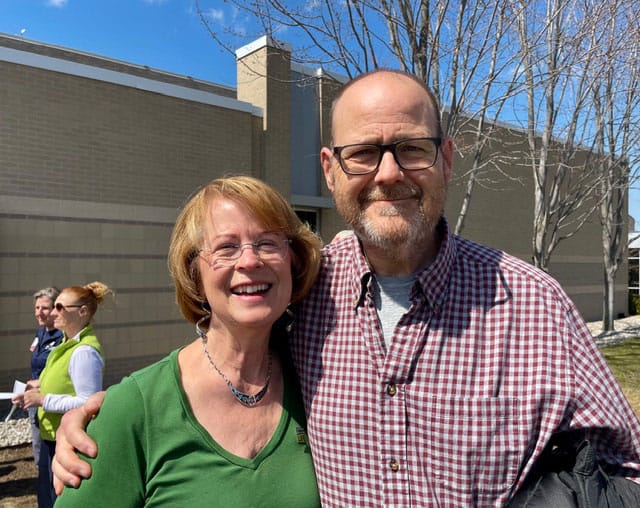
She was! But timing was everything...
John’s heart was still not strong enough to accept a new kidney, and Holly was going to be leaving for an extended period of travel.
Paired Exchange
In a paired exchange, living donors who are incompatible with their intended recipient are able to swap with another incompatible pair, enabling two or more recipients to receive compatible kidneys. This program maximizes the utility of living donations, often resulting in better-matched, longer-lasting transplants.
Essentially, Holly donated her kidney to an unknown recipient in John’s name. As a result, John was moved to the top of the list as soon as he was ready. Shortly thereafter, John was once again placed on the “active” list.
On May 2, 2023, John and Tracy got the call that a kidney was ready. They didn’t know the donor, but they know that Holly’s donation made it possible.
The surgery was harrowing. John had a 51 percent chance of survival. Heart issues popped up in surgery and John even had a heart attack in recovery. But the nurse said it was the most perfect match she had ever seen, and John pulled through.
Three Years Later
The first year was rocky, but John and Tracy were fueled by gratitude.
According to one post from John’s Caring Bridge web page by Tracy, “...John has had the usual challenges with balancing his transplant medication, and a run in with dangerously low white blood cell counts, but what is continuing to present challenges is John's heart. His doctors tell us that the transplant has ‘exacerbated his congestive heart failure’, and while he was not having any symptoms prior to the transplant, he struggles with them now.”
Just a short time after this post, John’s cardiac and transplant specialists were able to find the right balance of medication. Since then, he’s been able to attend his daughter’s wedding, he is growing garlic, flowers and tomatoes; best of all, enjoys the simple joys of time with friends and family, including his longtime Rotary exchange daughter’s new grandbaby.
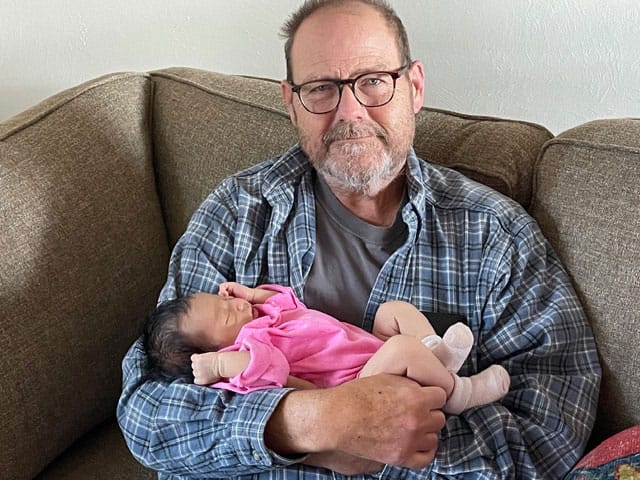
While many people drudge about the monotony of everyday life, John and Tracy know that each moment is a gift. Based on the averages, John’s kidney should last until about 2033. Ten years he would never have known if it wasn’t for the hard work and diligence of his medical team and the generosity of his dear friend Holly.
The Vreekes are also grateful for all who have supported them along the way. According to Tracy, “So...while the road is long, and it leads us to who knows where, we will travel each day with patience, and gratitude, and joy for every curve and rest stop we find ourselves at along the way. Our hearts are filled with the gladness of love for all of you.”
Becoming an Organ Donor
Every 7.5 minutes another person is added to the organ transplant waiting list. One organ, tissue and eye donor can save 8 lives through organ donation, restore sight to 2 people through cornea donation and heal more than 75 people through tissue donation.
Becoming a donor is easy. Anyone 15 or older in Wisconsin can register to be a donor. Individuals can register to become a donor when they apply for or renew their license at the DMV; when they purchase a hunting, fishing or trapping license; or when completing your Wisconsin income tax form.
Learn more about becoming an organ donor or living organ donation at donatelifewisconsin.org.